Leonardo DiCaprio collects fossils. Russell Crowe bought a prehistoric skull from him. And a billionaire paid $44.6 million for a Stegosaurus. Welcome to the world of natural history collectibles.


You’re visiting Leonardo DiCaprio. Drinks, conversation, and suddenly you spot a skull that’s millions of years old.
Sounds like a movie scene? It happened. Russell Crowe spotted a fossil Mosasaur skull at DiCaprio’s home and, by his own account, bought it for around $35,000.
Years later, the skull went to auction at Sotheby’s Australia and fetched AUD 65,000. A Hollywood anecdote with a window into a very real global collecting scene.
New York, Sotheby’s, July 2024. A Stegosaurus named Apex heads to auction with a $4–6 million estimate. After fierce bidding, the final price reaches $44.6 million including fees.

The buyer is billionaire Ken Griffin, who later loans Apex to the American Museum of Natural History in New York. The record does not last: in July 2026, a T. rex named Gus sells at Sotheby’s for around $50 million.
These are extraordinary individual results, not forecasts. But they reveal what exceptional specimens can mean to collectors.
What makes natural history compelling to collectors and investors? Start with something impossible to mass-produce: genuine scarcity. Only a tiny fraction of prehistoric life becomes fossilized, and fewer specimens are ever found.
Age alone is not enough. Completeness, condition, scientific significance, aesthetics, and documented lawful provenance can all shape desirability.
Upcoming auctions offer a glimpse of the range: Christie’s features an unusually spiked ammonite, while Heritage Auctions lists a fossil T. rex tooth from Montana’s Hell Creek Formation. Different objects, different stories, one highly specialized collecting market.
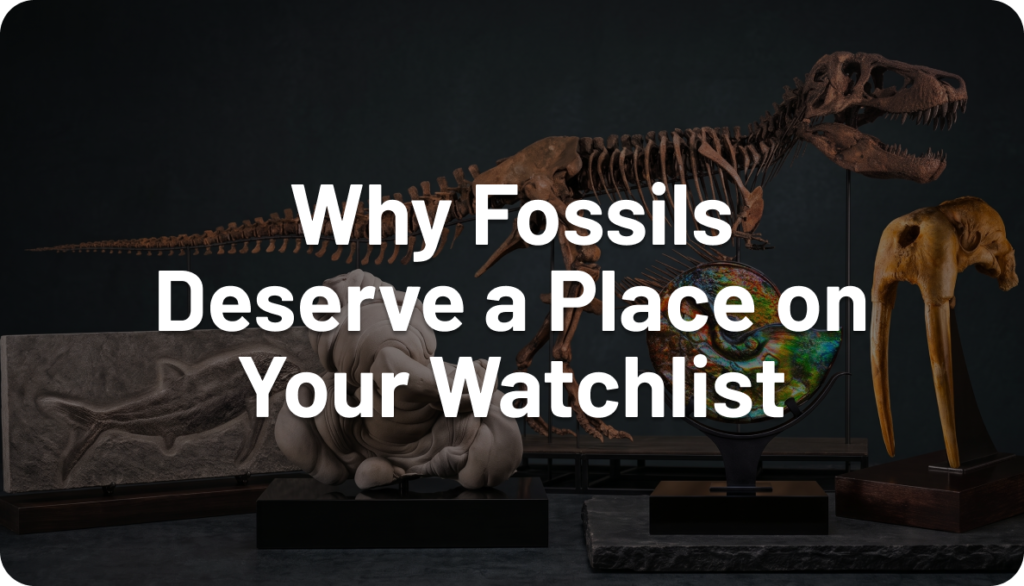
An ancient ocean. A Jurassic predator. An Ice Age walrus. And a natural sculpture shaped over millions of years. Four objects, four stories.
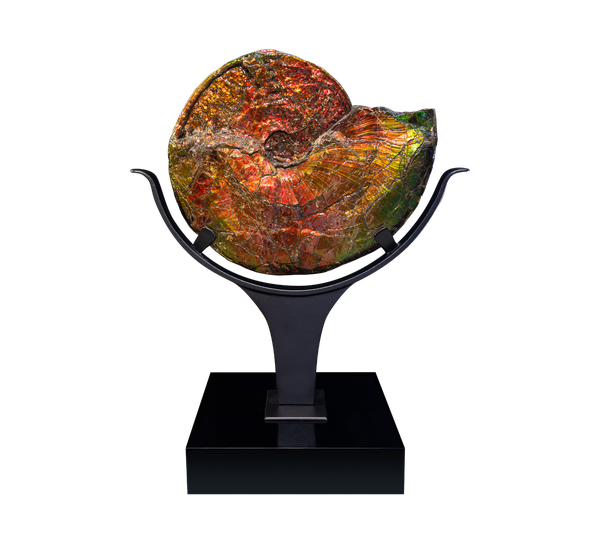
Around 70 million years ago, an ammonite moved through Cretaceous seas while dinosaurs roamed the land; today, its iridescent fossil shell from Canada tells that story in colors almost too vivid to seem natural.
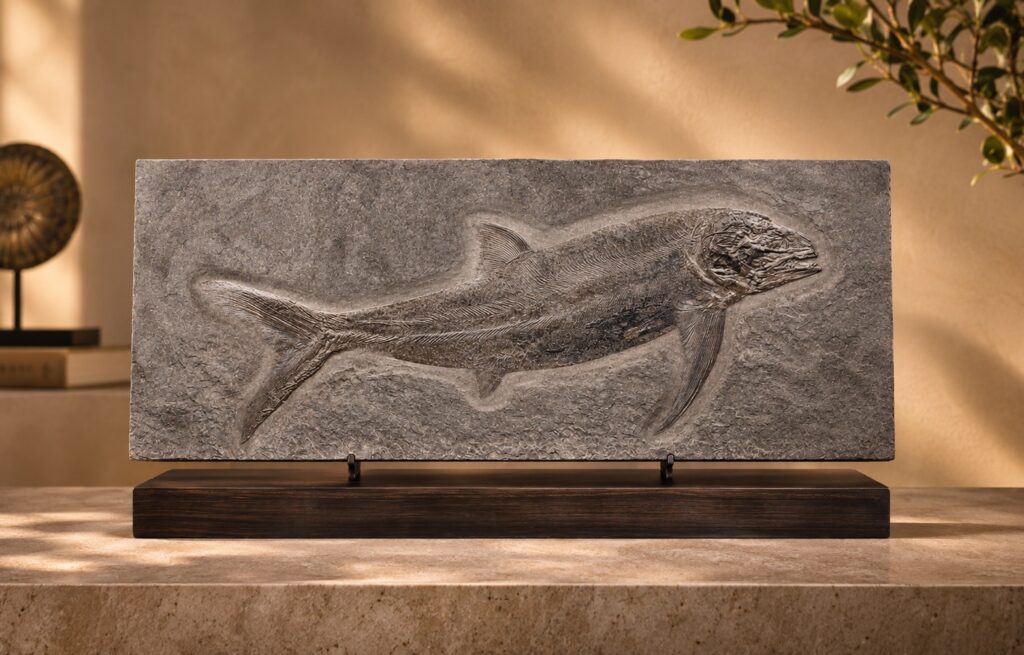
Travel back 185 million years: a vast sea covers parts of what is now southern Germany, where Pachycormus bollensis hunts for prey; this fossil comes from Holzmaden near Stuttgart, one of the world’s best-known sites for exceptionally preserved Jurassic marine fossils.
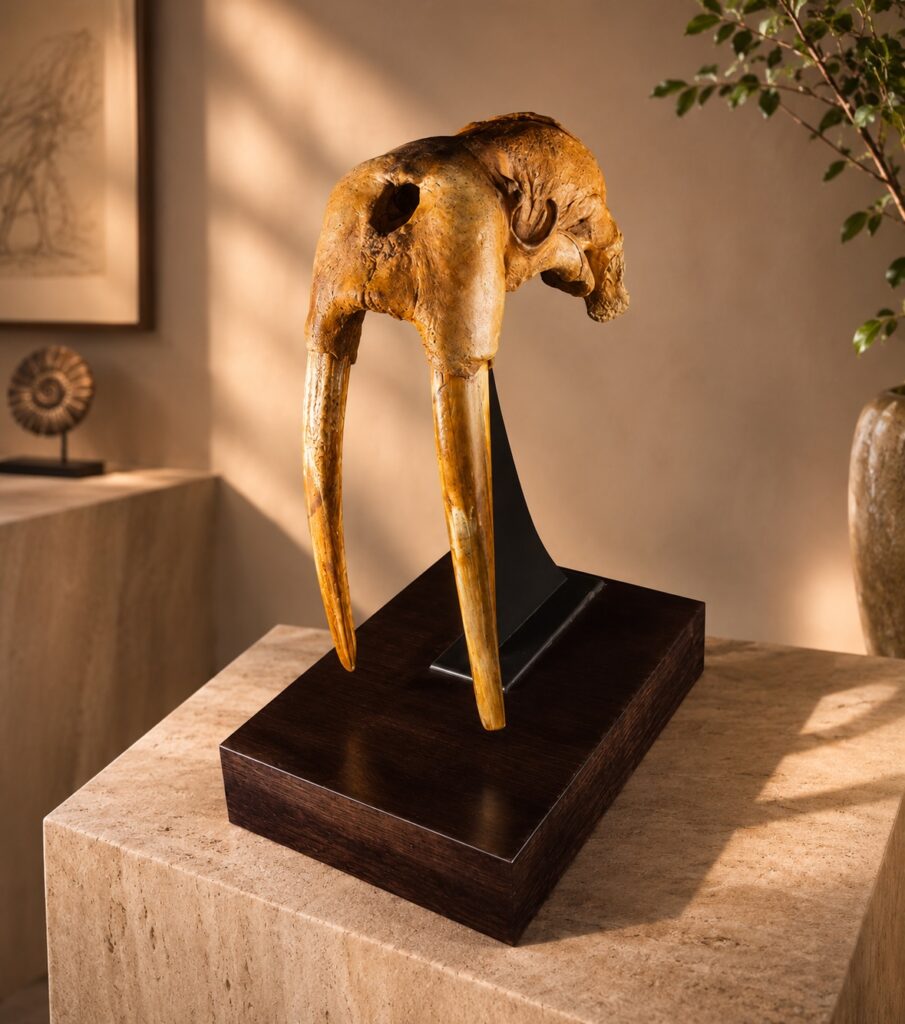
Alaska, around 10,000 years ago: icy winds sweep the coast as powerful walruses navigate Arctic waters; millennia later, a fossil skull with imposing tusks brings that lost world a little closer.
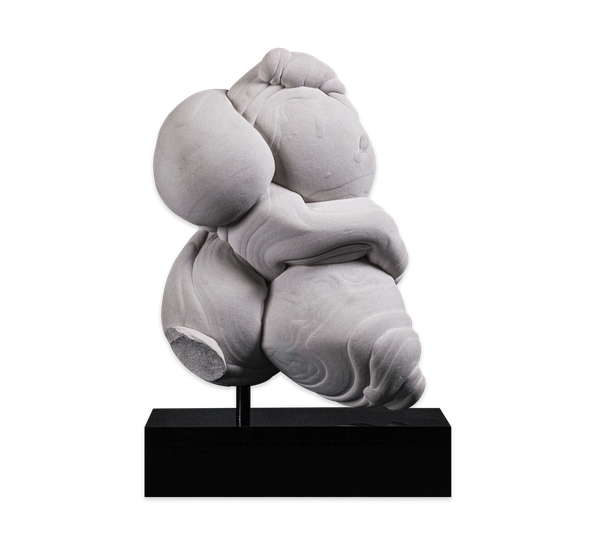
Long before modern design studios existed, water and minerals shaped this remarkable Gogotte in the sandstone of Fontainebleau; its flowing contours look as contemporary today as if they had just been designed.
With Timeless, you can participate in selected natural history collectibles with smaller investment amounts.
The past cannot be recreated. But you can become part of its story today.
This article is for informational purposes only and does not constitute investment advice. Collectibles can lose value, may be difficult to sell, and involve the risk of total loss. Past auction results do not indicate future returns. Please review the relevant offering documents before making any investment decision.