A closer look at five artworks, five different investment stories and the sourcing and due-diligence process behind every Timeless art acquisition.
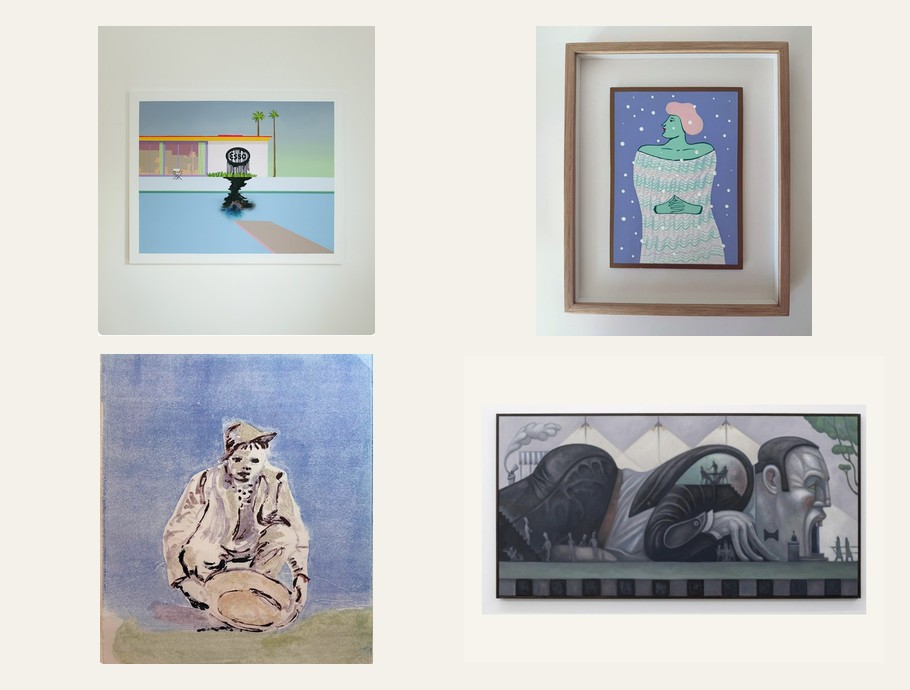
The art market is fragmented by design. Masterpieces, blue-chip editions, emerging positions and contemporary paintings do not move in the same way. That is why broad exposure to art is rarely the strongest argument. Selection is the argument.
For Timeless, each acquisition is assessed through a practical lens: the artist’s position, the work’s recognisability, provenance, condition, scarcity, medium, scale and timing. The five works below are not one single bet on “art”. They represent five different routes through which value can form.
The stronger art investment case is not built on one number. It starts with the reason a work can stay relevant: what makes it recognisable, scarce, collectible and connected to an artist’s wider market.
Available now · Hockney Esso Miami: Light Blue Pool / Celadon, 2026
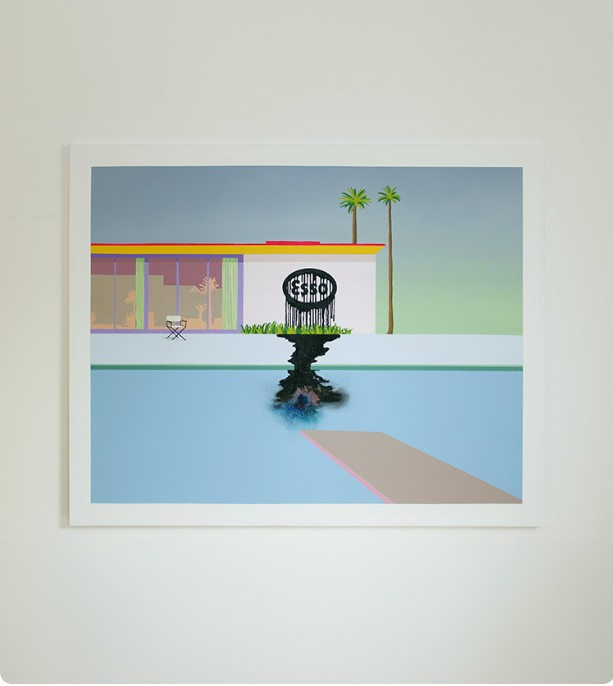
Zevs turns one of the most recognisable visual languages in post-war art, the poolside world associated with David Hockney, into a contemporary statement about branding, oil, leisure and status. Collectability often begins with immediate recognition: a work has to be readable within an artist’s wider practice and memorable beyond a small circle of specialists.
The investment case is built on a unique, large-format canvas that connects a familiar image type with Zevs’ own Big Oil Splash and Swimming Pools body of work. The combination of recognisability, scarcity and cultural commentary can support collector interest in a selective market.
Available now · Untitled (Woman in Green), 2020
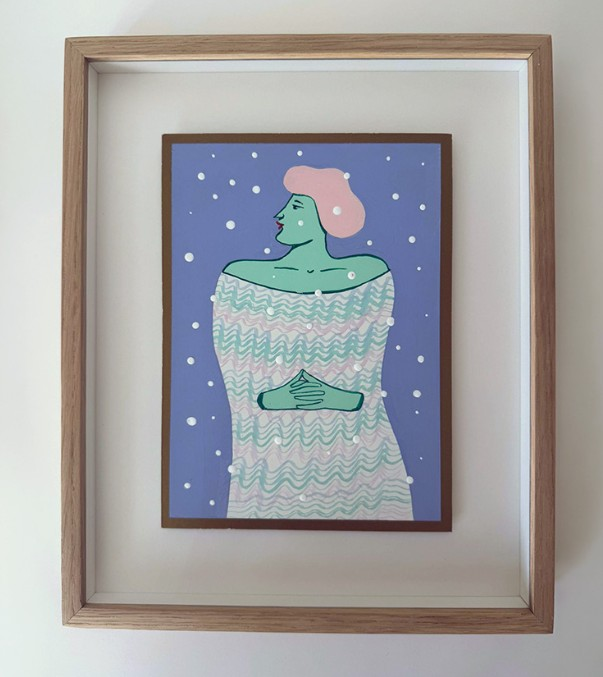
Nicolas Party has built a highly identifiable visual world: simplified figures, precise colour choices and a style that feels contemporary while drawing on a long history of portraiture and still life. Untitled (Woman in Green) compresses that language into a single, instantly readable image.
The strongest investment point is the combination of ongoing museum validation and the launch of a significant new body of work. Collectors prefer artists whose careers continue to develop institutionally while their practice evolves, rather than those repeating established formulas.
Party’s recent institutional programme includes solo exhibitions at the Currier Museum of Art (2025) and the Holburne Museum (2025), following earlier museum exhibitions at the Frick Collection, Museum Frieder Burda, Montreal Museum of Fine Arts and others.
Available now · The Gold Miners, 2017
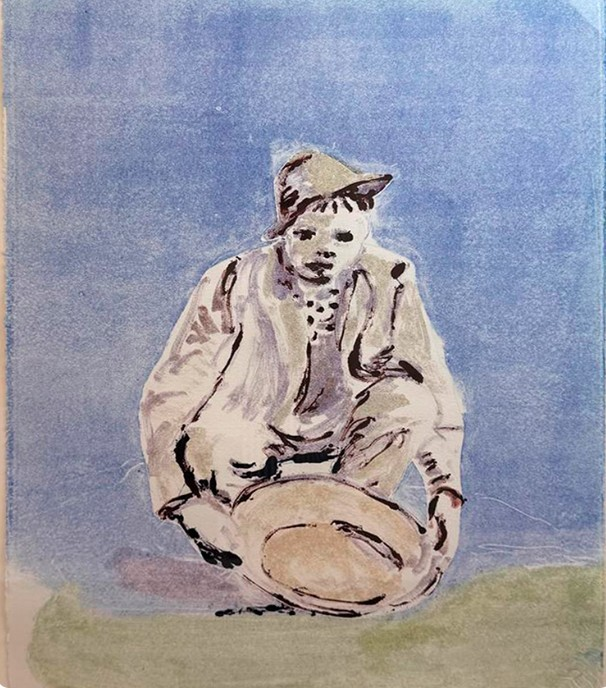
Claire Tabouret’s work is rooted in figures, groups and psychological tension. The Gold Miners is quieter than a major canvas, but it belongs to the same figurative universe: a human subject, reduced detail, atmosphere and narrative ambiguity.
The investment argument links to period and trajectory. A work on paper can provide access to an artist’s developing market while retaining the emotional tone and recognisable figurative language at the centre of the wider practice.
Claire Tabouret’s institutional profile has accelerated significantly in 2026, combining one of Europe’s most prestigious public art commissions (Notre-Dame de Paris), a major Grand Palais exhibition, a museum retrospective at Voorlinden, and continued solo gallery exhibitions with Almine Rech.
Available now · Chef’s Table, 2020
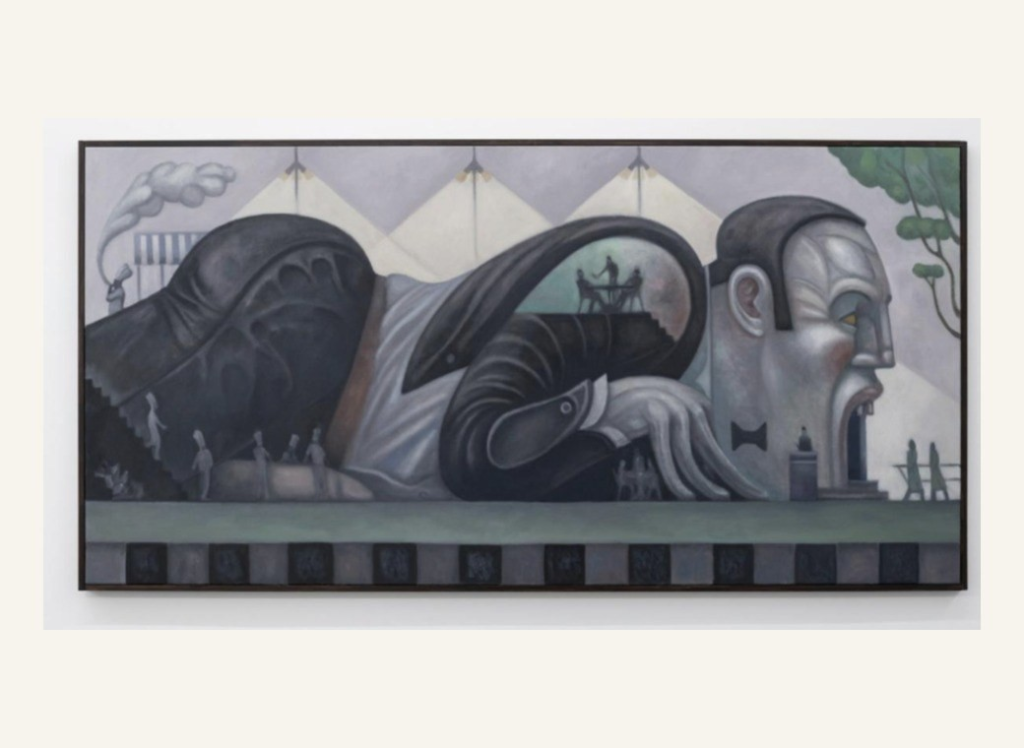
Justin Fitzpatrick’s paintings are dense, theatrical and difficult to reduce to a single image reference. Chef’s Table combines body, interior and organic form in a way that feels part stage, part anatomy and part mythology.
Here, the investment logic lies in medium and ambition. A large oil on linen can carry greater collector relevance than a smaller secondary work because it represents the artist’s mature practice and provides the physical presence often sought in painting.
Justin Fitzpatrick continues to build an international exhibition profile, with a recent Paris solo exhibition at Galerie Sultana followed by further European exhibitions in 2026, reflecting sustained support from leading contemporary galleries and growing international visibility.
Coming soon · Self Portrait with Chromium Oxide, 2025 (Part 2)
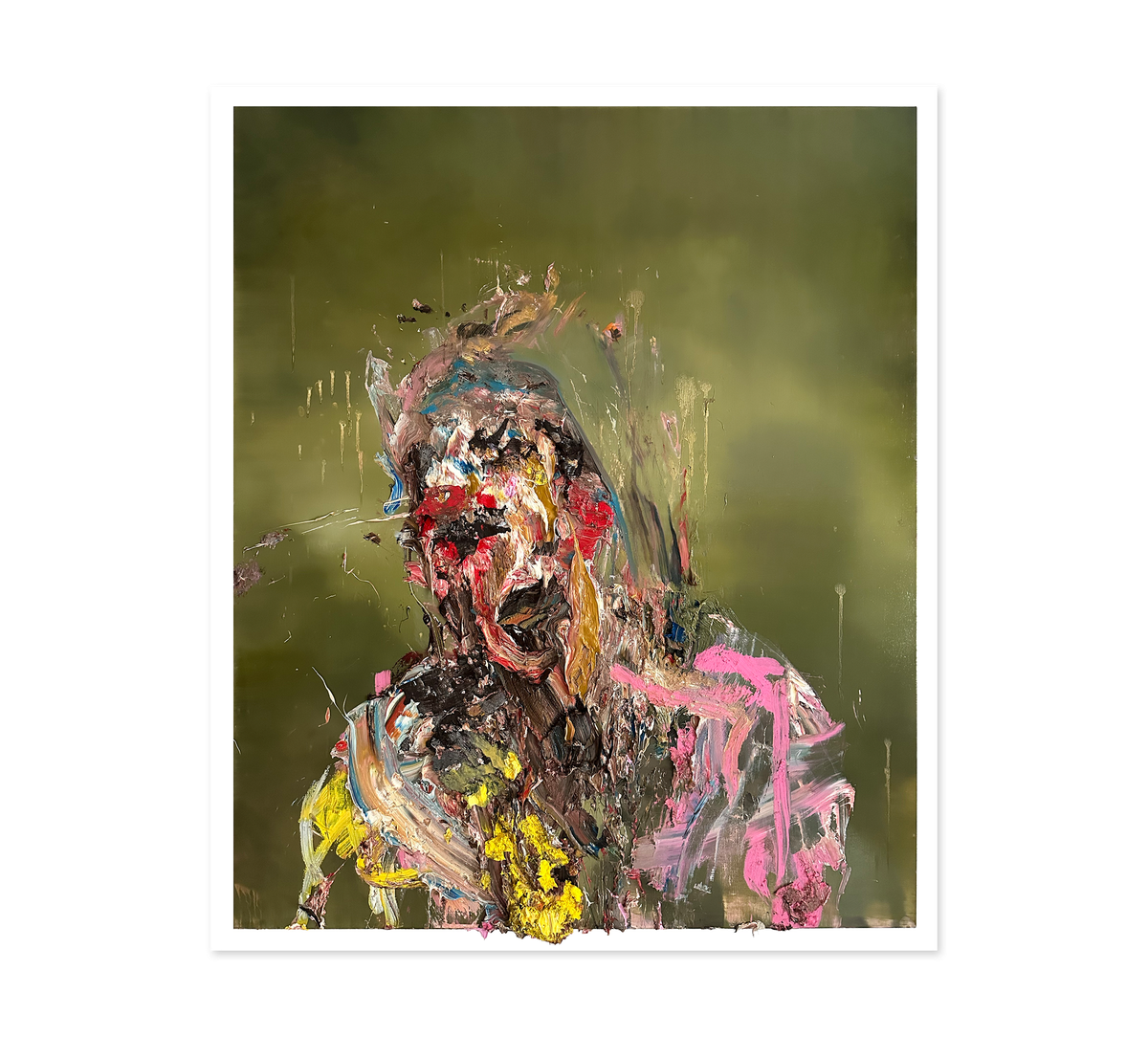
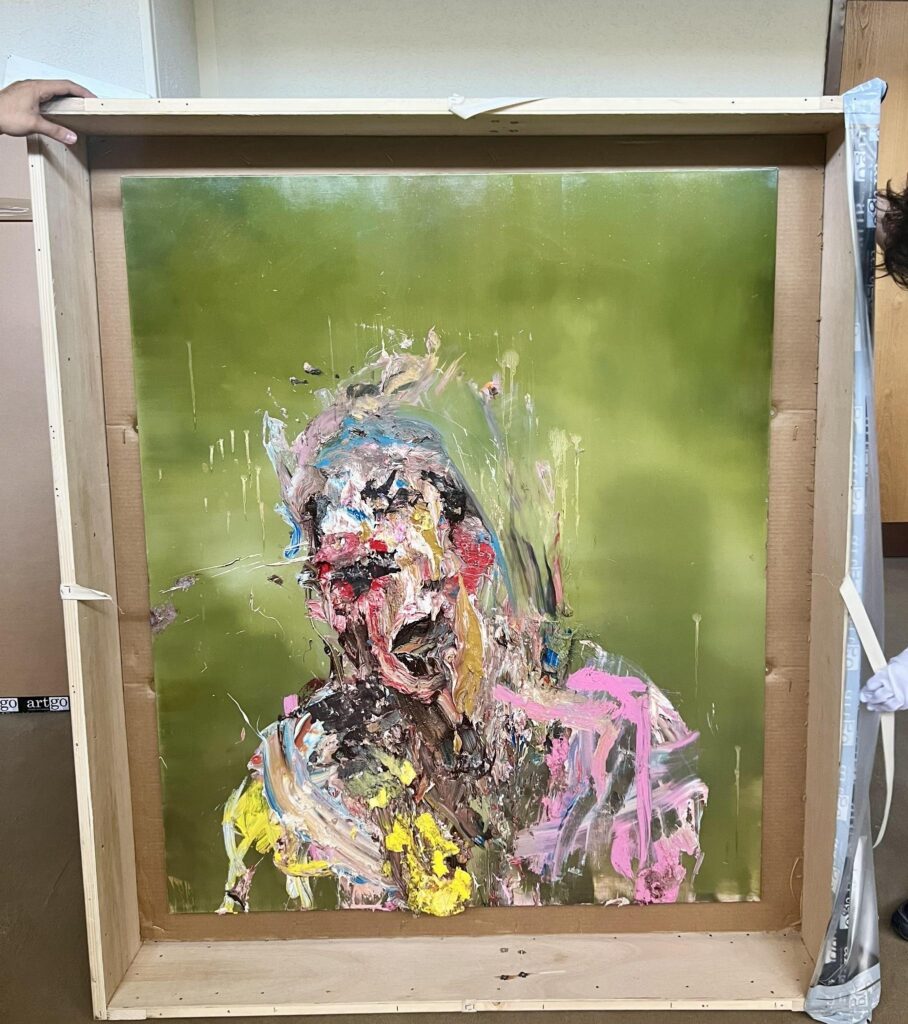
Antony Micallef treats paint as physical substance. In Self Portrait with Chromium Oxide, the surface is not simply an image but an object built through gesture, texture and density.
Timing also matters. Exhibition visibility can create a renewed moment of attention around an artist’s current practice. It does not predict future performance, but it can give collectors a clearer reason to reassess the work.
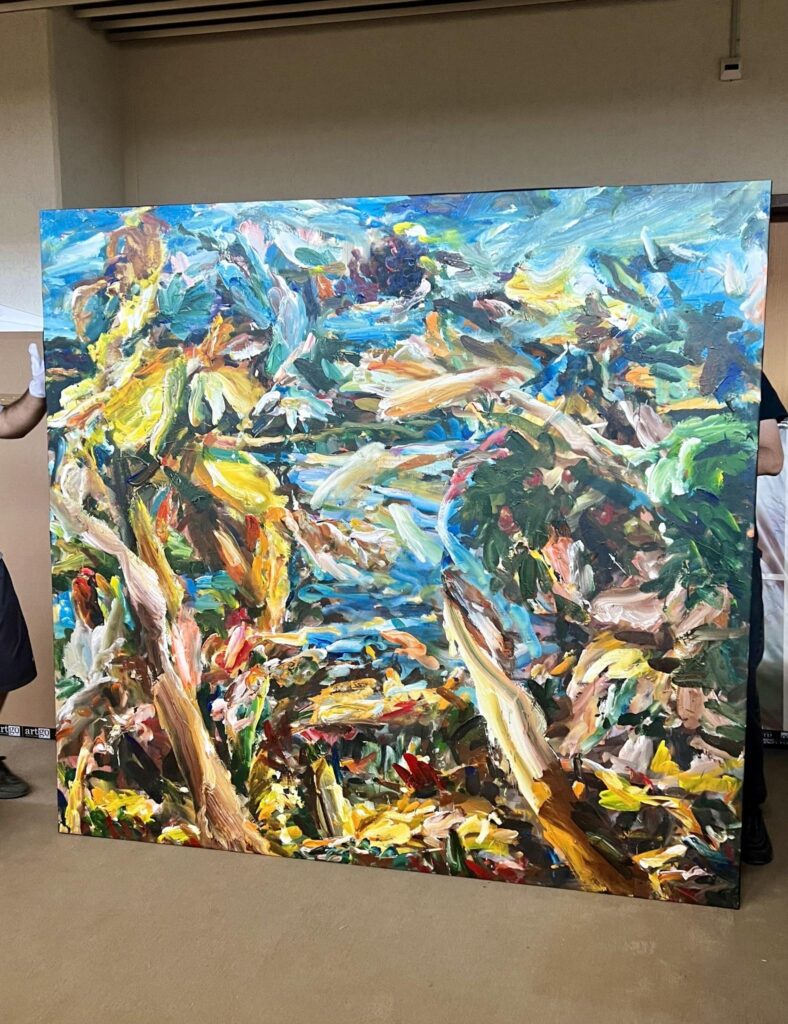
Recently, our internal art asset manager visited the warehouse of our strategic partner M&A Arts to inspect the storage conditions and review several recently sourced artworks. The visit provided a practical view of how the works are received, handled and stored, while allowing the team to assess their physical condition and material presence beyond the documentation alone.
Understanding the art market is one thing. Accessing it systematically is another. Timeless works with specialist galleries, dealers and secondary-market partners across contemporary, post-war, modern, pop-art and blue-chip edition segments. This relationship-driven network can surface works that do not simply appear through open-market listings.
Before an artwork is offered, the sourcing case is checked against the documentation and market context available for that specific work. The review can include provenance, transaction history, comparable market signals, artist trajectory, rarity, condition, medium, scale and pricing. No single factor is sufficient on its own.
This process cannot remove the risks of art investing. It is designed to make selection more structured, documentation more transparent and access possible without the storage burden or relationship network required for direct collecting.
Invest directly in an individual work, browse the wider selection of art assets, or use the Timeless Savings Plan to build exposure gradually over time.
This article is for informational and educational purposes only and does not constitute investment advice. Collectibles can rise or fall in value and may take time to sell. Past performance, historical asset CAGR, realised exits, auction results or market values are not an indication or guarantee of future returns. Please review the relevant offering documents before making any investment decision.
Sources: Timeless asset pages and offering documents; Timeless platform data; publicly available auction and market reports.