Some gemstones are valuable because they are beautiful. The strongest collectible gemstones add something harder to reproduce: a compelling combination of quality, size, origin and scarcity. This 3.936 ct Natural Thai Ruby brings those elements together in a stone from one of the most important historic ruby regions in the world.
For decades, rubies from Thailand and the Thai-Cambodian border were a major force in the international gemstone trade. Today, the picture is very different. Many of the deposits that once supplied the global market have been depleted or abandoned, and modern production is sporadic. That shift turns Thai origin from a simple geographic detail into an important part of the scarcity story.
Thailand has a deep connection to ruby. The Chanthaburi-Trat region, including the famous Bo Rai area near the Cambodian border, became one of the world’s leading commercial ruby sources during the second half of the twentieth century. GIA research notes that mining was particularly intensive from the 1960s through the 1990s, when reduced access to Burmese deposits gave Thai-Cambodian rubies a much larger role in the global market.
That era has largely passed. GIA describes most of these historic deposits as depleted, with many mines abandoned and only limited artisanal activity remaining. In other words, a fine Thai ruby today is connected to a source that cannot simply be scaled up again when demand rises.
Carat weight alone does not determine the quality of a ruby. The market looks at the complete stone: color, transparency, clarity, treatment status, cut, size and origin. Sotheby’s makes the same point in its collector guidance. As rubies become larger, it becomes increasingly difficult to find stones that combine saturated red color with transparency and brightness. When limited treatment is added to that equation, the pool becomes smaller again.
This is why two rubies of similar weight can trade in completely different price categories. Size creates potential scarcity, but the other quality factors decide whether that scarcity deserves a premium.
At 3.936 carats, this ruby has genuine visual presence while remaining within a size range that can appeal to both gemstone collectors and the high-jewelry market. That matters because demand for an important loose gemstone does not come from one buyer group alone. A stone can be collected in its own right, but it can also become the centerpiece of a significant piece of jewelry.
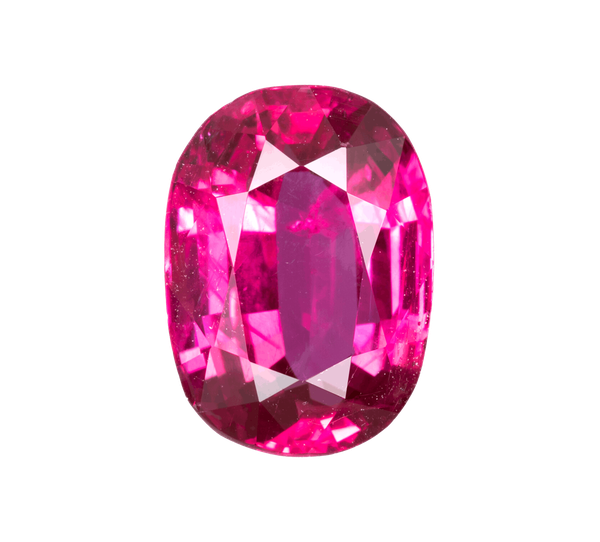
The stone is presented in an oval step/step cut, a format that gives the red body color a large visible surface. For a colored gemstone, this is more than an aesthetic detail. The cut determines how effectively the stone presents its color, transparency and life, and therefore contributes directly to the overall impression on which collectors judge it.
Thai origin is only one part of the thesis. The second is the ruby category itself. Exceptional rubies have repeatedly demonstrated the depth of collector demand at the top of the gemstone market. In 2023, the 55.22 ct Estrela de Fura from Mozambique sold at Sotheby’s for USD 34.8 million, setting an auction record for a ruby and for any colored gemstone at the time. The famous 25.59 ct Sunrise Ruby from Myanmar had previously sold for USD 30.3 million in 2015, close to USD 1.2 million per carat.
These trophy stones are not direct comparables to this asset and they do not predict its future value. Their relevance is different: they show how far the international collector market is prepared to go when rarity, color, size, transparency, origin and treatment quality come together in a truly exceptional ruby.
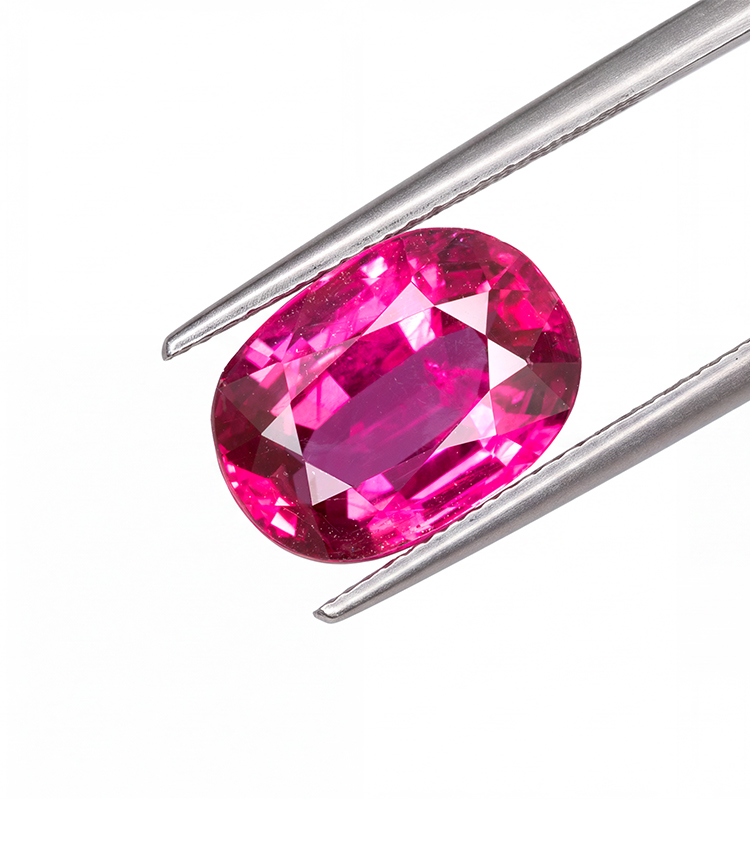
The case is not simply that rubies are rare. It is that the supply of genuinely interesting rubies becomes progressively narrower once several filters are applied at the same time. The stone must be natural. Its origin must matter. Its color and transparency must be convincing. Its treatment history must be understood. Its cut must support the overall appearance. And its size must be large enough to move it beyond ordinary commercial material.
This Natural Thai Ruby combines a nearly four-carat size with a provenance tied to a historic source whose large-scale mining era is largely over. That is a different scarcity story from a newly produced commercial gemstone. It is also why the asset should be viewed with a long-term collector mindset rather than as a short-term trade.
For investors, the attraction is straightforward: exposure to a tangible asset with finite natural supply, recognized international collector demand and a provenance that becomes harder, not easier, to replicate as historic deposits disappear from production.
Gemstones are not standardized financial instruments. Their value depends on individual quality, certification, provenance and the market available at the time of sale. They can also take time to sell. Historic auction records and current collector demand provide context, but they are not a forecast for this stone.
Sources: Gemological Institute of America, A Study of Rubies from Cambodia and Thailand (2017); GIA Gems & Gemology, Mineral Inclusions in Ruby and Sapphire from the Bo Welu Gem Deposit in Chanthaburi, Thailand (2019); Sotheby’s, Ruby Jewelry: A Collector’s Guide (2026); Sotheby’s, 2023 in Review: Jewelry.
This article is for informational and educational purposes only and does not constitute investment advice. Collectibles can rise or fall in value and may take time to sell. Past performance, auction results and market records are not an indication or guarantee of future returns. Please review the relevant offering documents before making any investment decision.